THE TECHNOLOGY
Most resistance therapy relies on estimates: a band of roughly the right strength, applied roughly the same way each time. Rion's Belt is designed to replace estimates with measurement, so everyone involved in a child's care can see that therapy is delivered as intended.
Measured. Prescribed. Verified. Monitored.
From prescription to progress

01 Prescribe
A clinician specifies which muscle groups to target, where each cord runs, and how much resistance each cord provides.
02 Set
Calibrated markings on each cord show where to place the cord lock. Limiters physically stop it from being set too high.
03 Measure
A strain sensor on each cord is designed to measure the real force during movement, not just the setting.
04 Monitor
Readings are designed to travel wirelessly to a companion app that confirms settings, logs sessions and supports remote review.
THE WEARABLE

Built into clothing, so it looks and feels like clothing.
Resistance cords run along the garment seams.
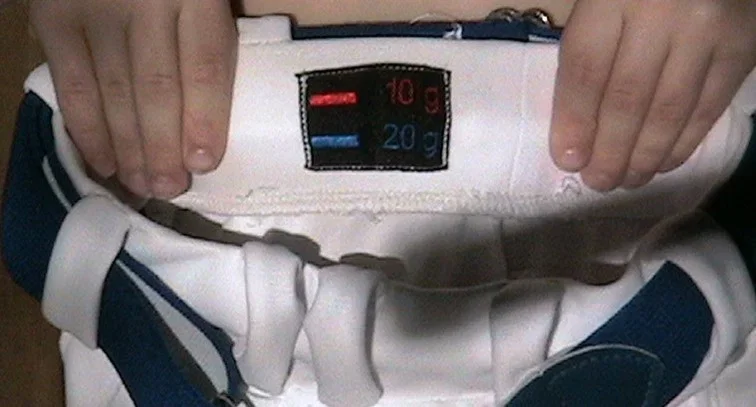
Electronics housing at the waistband.
Photos show an early-stage prototype. Final design will differ.
Resistance cords
Elastic cords run along the seams inside channels that hold them in position through the full range of motion.
Secure fit
Ankle or wrist straps, and an optional shoulder harness, keep the garment from shifting so resistance stays consistent.
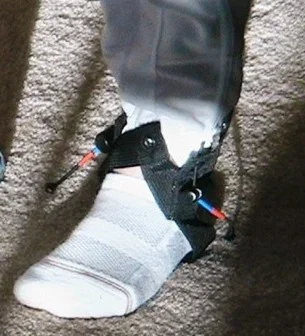
Ankle straps keep resistance consistent.
Targeted placement
Cords can follow the outer leg, inner leg, front, back or diagonal paths to match the muscle groups in the prescription.
Multiple garments
The same approach adapts to pants, shirts, sleeves and other garments.
CALIBRATED RESISTANCE
The same setting means the same force.
Resistance markings are placed using each cord's material properties and the wearer's measurements, so a given level delivers the same force for a tall child and a small one. Cords of different thicknesses cover different ranges, from very light settings for young children to higher levels for adolescents and adults.
Limiters
Physical stops on every cord prevent excessive settings.
Low Load
Designed for light, sustained resistance, not weight training.
Repeatable
Marked levels make a clinic setting easy to reproduce at home.
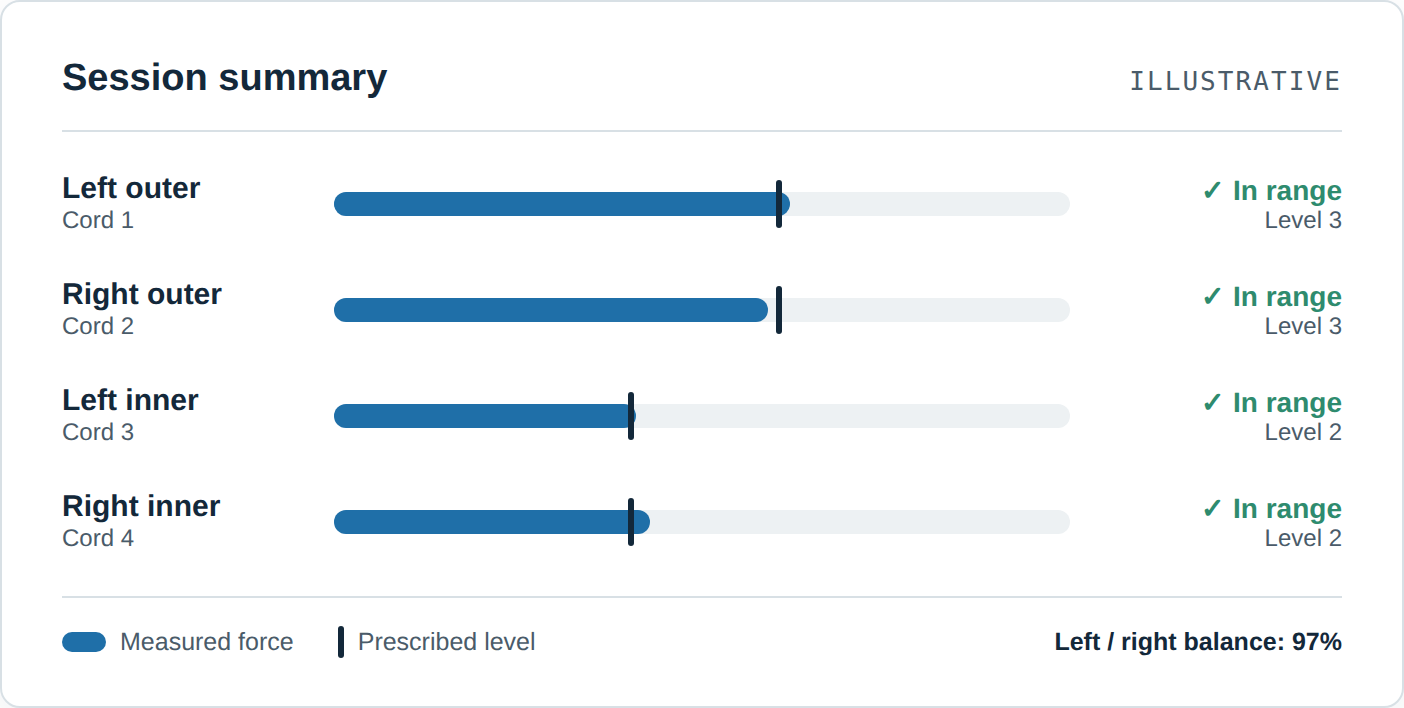
Each session becomes a record.
The monitoring system is designed to give clinicians and families the same view of what happened between visits.
MONITORING AND DATA
Setup check
Confirms each cord matches the prescribed resistance and flags any that don't.
Left / right symmetry
Compares both sides to show imbalance and change over time.
Safety alerts
Flags force above the prescribed maximum or sessions beyond the planned schedule.
Session log
Records when the garment was worn and for how long.
Remote review
Lets clinicians review progress and update a prescription between visits.
Two sensory systems
Steady input supports proprioceptive work; differing resistance across muscle groups supports balance work.
INTELLECTUAL PROPERTY
Protected in the United States and Europe.
European status: EPO Register
Rion's Belt is in the final stages of design and development. It is not currently commercially available and has not been evaluated or cleared by the U.S. Food and Drug Administration or any equivalent regulatory body.